Course Authors
Robert M. Russell, M.D., and Joel B. Mason, M.D.
Release Date: 07/09/2002
Upon completion of this Cyberounds®, you should be able to:
Discuss the impact of the graying of society and describe how the physiology of aging alters nutritional needs
Discuss how lean mass typically diminishes with aging and how such loss impairs functional capabilities
List the appropriate measures to attentuate or reverse the loss of lean mass
Discuss the appropriate levels of vitamins for the elderly.
Mason
Today, we wish to discuss medical science's exciting new insights into the impact of nutrition on aging and, conversely, how aging impacts upon the nutritional needs of an individual.
Let me begin by indicating that this is not of minor significance. In part, this is due to dramatic changes in the demographics of aging, both in North America and in most of the developed world as well. At the turn of the last century, approximately 4% of the U.S. population was over the age of 65. Currently, about 12% of the population is elderly and, if present projections hold true, it is estimated that the elderly population will comprise approximately 20% of the population by the year 2020. Projections in Northern Europe suggest that even a larger portion of their population will be comprised of the elderly.
Not only are the demographics of aging changing but the nature of our lifestyle as we age is also changing. Of all the individuals who turn 65 in the year 1990, it is estimated that about half of them will spend time in a chronic care institution before they die. Of that half, approximately 50% will spend more than a year in a chronic care facility. This is important because the nutritional needs of individuals in chronic care institutions differ somewhat from the free-living elderly.
A prime example is the issue of vitamin D status. Not only are the elderly more prone to develop depletion of vitamin D, but this is particularly true for institutionalized elderly -- in part because of their diet and in part because of their tendency not to be exposed to sufficient sunlight.
These remarkable changes in aging in our population have prompted considerable research over the past decade and it is important for both the clinician as well as the researcher to remain up to date in regard to the explosion of new insights we have regarding the physiology of aging, as well as the changes in nutritional needs that accompany that aging process.
Rob, can you discuss for us some of the changes that seem to accompany aging with regard to the gastrointestinal tract since that obviously could have a huge impact on the ability of the elderly to assimilate nutrients in their diet?
Are Macronutrients Malabsorbed in the Elderly?
Russell
Let's first consider how the elderly person handles macronutrients, that is fat, protein, carbohydrate. We have studied almost 100 individuals ranging from ages 20 to 95 and put these individuals on 100 g/day fat diets for a period of six days. During the last three days of the 100 g fat diet, feces were collected and were measured for fat content. Much to our surprise, we found that there was absolutely no increase in fecal fat excretion with advancing age.(1) We were surprised at this because studies in rats had shown that fat malabsorption does, in fact, increase with age, primarily due to a diminished pancreatic function.
Although, in the human, pancreatic function does decline somewhat with age, it still remains far in excess of what is needed to digest normal amounts of dietary fat, at least up to 100 g/day. Thus, the elderly person, who is healthy and free-living, as were the subjects that we studied, absorbs fat from the diet perfectly well and no less efficiently than the person aged 20.
One can stress the situation by increasing dietary fat to unphysiologic levels, such as 120-130 g/day -- a very high fat diet for anybody to consume. At these very high fat doses, the older person starts excreting increased amounts of fecal fat whereas the young person will not change the percentage of fat in their feces.
Much the same can be said for protein; that is, the older person can handle normal protein diets just as well as the young person and does not malabsorb any more protein than the younger person. However, when eating a high protein diet, such as a diet of 1.5 g/kg/day, the older person does, in fact, begin to excrete more protein (as measured by fecal nitrogen) than does the younger person. Once again, I want to stress that the levels of fat and protein that I am talking about, where the older person begins to malabsorb small amounts of it, are far in excess of what the average elderly person normally eats.
As for carbohydrate, the situation is a little bit confusing because good detailed studies have not been carried out. There was one study in New York by Holt and colleagues on elderly people that described increased breath hydrogen upon feeding diets that were extremely high in carbohydrate content, such as 200g of carbohydrate per meal. In contrast, the younger person's breath hydrogen did not increase.(2)
Breath hydrogen can rise, after a carbohydrate meal, because of exposure of the carbohydrate to bacteria. The colonic bacteria ferment the carbohydrate, which has been dumped into the colon and malabsorbed, thereby causing a rise in breath hydrogen. It is possible that the rise in breath hydrogen in older people results from carbohydrate malabsorption. However, the subjects in this study were never screened for atrophic gastritis which would cause higher amounts of benign bacteria (i.e., swallowed bacteria) to reside in the small intestine. Such bacteria do not cause malabsorption but they do ferment carbohydrate and produce a rise in breath hydrogen. From this study, therefore, we don't really know whether older people malabsorb carbohydrate to a greater extent than do younger people.
Joel, with regard to macronutrient metabolism in the older person, do you want to address the subject of "sarcopenia" or muscle wasting? What is the etiology of sarcopenia in the older person since we know it is not due to malabsorption of protein and calories?
What Can You Do About Sarcopenia?
Mason
The issue of sarcopenia in aging is an interesting one. It is a relatively new term, although it is a phenomenon that has been recognized for some years. As we age, there is, on average, a predictable decrease in lean body mass, primarily skeletal muscle, which seems to occur even if we continue to eat adequately. The etiology is not really known. It is felt that diminished commitment to regular exercise, as we age, might be a contributing factor but, clearly, there are other factors. It is further argued as to whether this represents a physiologic change with aging or a pathologic one. In some respects, this becomes a matter of semantics. Regardless of how we characterize it, the decreasing muscle mass that accompanies aging clearly contributes to impairment in our functionality. The lost muscle mass undermines our ability to carry out independent tasks necessary to carry on daily living and makes us considerably more susceptible to serious falls.
A large portion of our audience is probably aware of several studies that were done approximately five years ago in which this issue was addressed with the use of exogenous growth hormone. A group of essentially healthy elderly men who had slightly low growth hormone levels (which is common in the elderly) were randomized to receive either thrice weekly growth hormone injections or a placebo, over a period of several months. There were demonstrable increases in lean mass as well as a small but significant increase in skeletal mass. Nevertheless, we do not feel that this is an appropriate means to address sarcopenia on a public health scale. This is, in part, due to the considerable expense of growth hormone as well as its side effects.
At the USDA Human Nutrition Research Center, we have taken a considerably different track, one which is not as technologically sophisticated, and, yet, the approach works considerably better with less side effects. We emphazise strength training exercise.(3) Several studies conducted both by our investigators, as well as other investigators around the world, have clearly demonstrated that even the oldest of the old, namely people in their 90s, can very effectively respond to modest exercise programs that provide just as much increase in lean mass as growth hormone and just as much improvement in strength and subsequent protection from falls.
Furthermore, the improved functionality of these individuals, along with increased strength that accompanies these exercise programs, actually improves mood for these people (i.e., less depression). I would also like to indicate that this is not only effective for essentially healthy elderly but has shown to be effective in debilitated nursing home patients, as well as for individuals with a variety of degenerative diseases, including rheumatoid arthritis. The important issue here is that through these strength training exercises, which,by the way, merely involve 20 minutes of exercise three times a week, people are able to increase their strength, increase their independence as well as their mobility and regain many of the activities of daily living that they were previously unable to do.
Rob, can you readdress the issue of changing micronutrient (vitamin and mineral) needs in the elderly? Your previous comments about macronutrients would seem to suggest that nutrient needs do not change much for the elderly since the intestinal absorption of macronutrients does not change to a large degree.
Vitamin D and Calcium: Sunlight Isn't Enough!
Russell
Yes, you have already mentioned some of the problems with vitamin D. The older person does have an increased vitamin D requirement for many reasons: first, the elderly person, as you have already mentioned, does not expose himself/herself to sunlight very much, particularly if the person is institutionalized. Without this exposure, vitamin D cannot be synthesized in the skin. And, even if older people were exposed to sunlight, it has been shown that their skin is only 40% as efficient as a child's skin in synthesizing vitamin D. In addition, there appears to be decreased responsiveness of the kidney to convert the inactive form of vitamin D to the active hormonal form, 1,25 dihydroxy vitamin D, with advancing age.
Joel mentioned low dietary intakes as a factor and this presents a problem for almost all micronutrients, for the simple reason that older people are not taking in as much food as younger people are. Much of this caloric reduction is appropriate since activity is lower in older people than in younger people; however, when an older person is not eating very much food, his/her vitamin and mineral intakes may decrease to inappropriately low levels -- since, for many of these micronutrients, the need with aging does not go down. Vitamin D illustrates a situation where the nutrient need actually goes up for the reasons we have been talking about.
The recommendation for adequate vitamin D intake in a person more than seventy years old was raised recently from 200 to 600 IU per day. This makes it very difficult for the older person to achieve by food alone. Vitamin D supplementation is almost mandatory for the older person, particularly if he/she is not, for any reason, being exposed to sunlight or drinking several glasses of milk each day. It should also be realized that cheese, yogurt and calcium-fortified orange juice do not contain any vitamin D.
Calcium is also a problem since the recommendation for adequate calcium intake for older people has recently been increased from 1000-1200 mg/day. Such a level of calcium can be obtained by drinking or eating the equivalent of three servings of calcium-rich dairy products per day or 8 ozs. of calcium fortified orange juice three times per day. The elderly person is often unable or unwilling to take in these foods, thus, the issue of calcium supplementation for an older person should also be on the physician's mind. If an elderly person is not taking in an adequate intake of calcium 1000-1200 mg/day, supplements should be prescribed.
Vitamin B12 Is Not Well-Absorbed
A third micronutrient that is problematic in the elderly is vitamin B12. Vitamin B12, when it is bound to food, is not absorbed efficiently in many elderly people due to atrophic gastritis, which is estimated to affect between 10-30% of the U.S. population over the age of 60. In individuals with atrophic gastritis, vitamin B12 can not be dissociated from food protein due to lack of adequate acid pepsin digestion. Thus, vitamin B12 is not freed up to then bind with intrinsic factor for eventual absorption. In addition, atrophic gastritis results in bacterial colonization of the upper GI tract, as mentioned earlier, and this bacterial colonization can result in the bacteria taking up whatever small amounts of B12 are released from food, effectively depriving the host of this needed vitamin. Therefore, many elderly people need to ingest the B12 either in a vitamin supplement or in the form of a fortified cereal.
For other vitamins and minerals, we are less certain, although there does appear to be a slightly increased need for vitamin B6 in the older person as compared to the younger person, which is reflected in the new Recommended Dietary Allowances. We do not know whether this slight increased need for vitamin B6 is due to malabsorption of the vitamin or if the B6 is destroyed more easily or bound to tissue less readily in the elderly person. For all of the other vitamins and minerals, other than the ones we have talked about, there is no indication that older people have a higher need than for younger people.
Daily Supplements Needed by Many Elderly
| Vitamin D | 600 IU |
| Vitamin B12 | 2.4 ug |
| Calcium | 1,000 - 1,200mg |
Joel, you are an expert in folate metabolism and needs of the elderly. Did folate's RDAs need to be raised for the elderly?
Why Folate's RDA Was Raised?
Mason
The new Recommended Daily Allowance (RDA) for folate has also been raised, not only for elderly adults, but also younger adults, so the level now is back to 400ug/day. This was done because a variety of adverse health consequences that subtle folate depletion produces has now been shown. First, and not pertinent to the elderly, is the fact that folate in adequate amounts clearly protects against neural tube birth defects.
More relevant to the elderly is the issue of homocysteine, a sulfur containing amino acid whose blood concentration rises with mild folate depletion. Studies from our institution indicate that, even among otherwise healthy free-living elders in the community, approximately 20-30% have low enough folate intake to cause significant elevations of homocysteine, rising to the range that is associated with increased risk of cardiovascular disease.(4) Although it remains controversial, it appears that elevations in homocysteine are an independent risk factor for myocardial infarctions, peripheral vascular disease, as well as cerebrovascular diseases. Another large study, just published from our institution, indicates that, with the recent supplementation of folate in uncooked cereal grains in the U.S. (primarily flour), there has been a remarkable decrease in the prevalence of high homocysteine levels among the elderly.
Lastly, I should mention one of the most controversial, potential beneficial effects of increased intake of folate in the elderly -- protection against cancer, primarily colorectal cancer.(5) There is rapidly accumulating epidemiologic evidence, as well as small clinical trials, which suggest that increasing folate up to about 1 mg/day seems to have a protective effect against the development of this common cancer. I should mention that it is best not to recommend a total daily intake of folate over 1 mg at this point. At levels less than 1 mg, there is essentially no risk of either disguising or exacerbating covert B12 deficiency.
Folate effects
- prevents neural tube defects
- lowers homocysteine levels
- probably lowers cancer risk (colorectal)
There does seem to be at least one instance where the change in micronutrient requirements, as we age, dictates a decreased intake of that vitamin, namely vitamin A.
Vitamin A: Is Too Much Toxic for an Older Person?
Russell
Vitamin A comes in the body in two forms: preformed (from meat and dairy products) and as carotenes from fruits and vegetables. The tolerance of an older person for preformed vitamin A seems to be less than for the younger person because the older person is less able to clear vitamin A from the circulation and put it into storage. As a result, vitamin A, circulating in the blood as retinyl esters, the esterified form of retinol, can build up in the blood and actually be converted to "toxic" compounds. It certainly should be said that an older person should not take a vitamin supplement that contains more than the Recommended Dietary Allowance for vitamin A in addition to what he/she is taking in with their meals. This is particularly important since it appears that there is a thin margin of safety in using vitamin A for the older person. Recently, it has been shown that even taking in twice the RDA of vitamin A can result in increased bone demineralization, exactly what we are trying to fight against by recommending higher levels of vitamin D and calcium in the diet.
It should be noted that the new recommendations by the Food and Nutrition Board for the Recommended Dietary Allowances are for the most part being based on health effects. They are not being based on the amount of a vitamin and mineral that it takes to prevent a deficiency state from occurring but rather the amount that it takes to prevent a chronic disease state from occurring.
There is great interest in the antioxidants as health promoting nutrients. Joel, what are your thoughts about prescribing vitamin E and vitamin C, for example, for elderly people?
Possible Benefits of Vitamin E
Mason
The issue of vitamin E supplementation in elderly people remains a controversial one. There are two potential benefits to be gained from supplementation with vitamin E. One is fewer cardiovascular events and the other is an improvement in the immune system of the elderly. There is some suggestion from the large CHAOS trial that there is a reduction in cardiovascular events with 400 mg of vitamin E daily(6) although there is one other randomized intervention trial which did not see a similarly beneficial effect. Nevertheless, there are probably little or no significant side effects from taking this level of supplementation, although, in another trial, there was a very small increase in the risk of hemorrhagic stroke with doses exceeding 200 mg/day. I should indicate that the increased risk for stroke was almost minuscule.
Studies at Tufts, as well as other institutions, clearly indicate that one can boost the somewhat impaired cellular immune response in the elderly by giving doses of vitamin E at these levels. Whether this translates into diminished risk of serious infectious diseases is not yet known. Overall, I don't have any objections to recommending supplementation of 200-400 mg of vitamin E/day, although I think the evidence supporting the beneficial effects of such supplementation is tenuous at this point.
The situation is similar, in many respects, to the vitamin C story, although the data supporting vitamin C's ability to prevent infections is even less strong than the data for vitamin E. I should note that the data supporting vitamin C's salutary effects (e.g., cancer and cardiovascular disease prevention) is even less persuasive. Nevertheless, it is hard to argue with individuals who feel as though they benefit from such supplementation because doses as high as a gram of vitamin C a day have little in the way of side effects, although some preparations seem to contain fillers that induce mild diarrhea.
Rob, what are the issues pertaining to carotenoid requirements in the elderly and the clinical implications thereof?
Russell
Well, you have already referred to a study done in Finland which looked at the efficacy of vitamin E and beta-carotene in preventing cancers. Vitamin E had no effect in lowering cancer risk but beta carotene actuallyincreased lung cancer risk among smokers.(7) This was a big surprise. I should mention that this study used beta-carotene supplements at fairly high dose. There is no indication that an increase in dietary beta-carotene causes increased lung cancer risk. However, this study and a subsequent study performed in the U.S. certainly dampened the enthusiasm for using beta carotene and, in fact, other carotenoids, for disease preventive purposes.
There is no doubt that high fruit and vegetable diets are correlated with lower risk of cancers at almost any site you wish to look at but these intervention studies give us a big warning that, although a little beta-carotene may be good in the form of what is contained in the diet, a lot in the form of a high supplementary dose may, in fact, produce unexpected harmful effects. It is generally recommended that people do not take beta carotene supplements at this time.
As for other carotenoids, there is less known about them but there are two that have recently become of great interest. We now have correlations between high lycopene levels, a carotene found in tomatoes and watermelon, which give both their red color, and reduced risk of prostate cancer. We have also seen a relationship between another carotenoid, leutein, which is found in dark green leafy vegetables such as spinach, and a decreased risk of the chronic eye disease, macular degeneration. Because no intervention studies have been performed using these two carotenoids, the data is inconclusive. We should consider it a work in progress.
The New Food Pyramid for the Elderly
Mason
Rob, given all the remarkable changes that occur as we age and given the attendant changes in nutrient requirements, it's not surprising that the National Academy of Science would be publishing the new RDAs for the elderly in the near future. Can you tell our members about the new food pyramid that is specific for the elderly that you and a few of our colleagues recently developed?(8)
Russell
Yes, once the RDAs become fully available, we will publish these numbers for each nutrient in a future Cyberounds®.
Modified Food Pyramid for 70+ Adults.
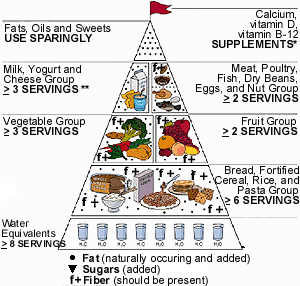
These symbols show fat, added sugars, and fiber in foods
* Not all individuals need supplements, consult your healthcare provider
** > Greater than or equal to
My colleagues and I recognize, as we said before, that elderly people are not taking in as many calories (i.e., as much food) as when they were young. Thus, many nutrients are not being taken in adequate amounts since the amount of food being eaten is less. In our newly designed pyramid, we made the base somewhat narrower to reflect the fact that less food is being taken in but, more importantly, the foods within the pyramid's building blocks are chosen to be nutrient dense: that is, many more nutrients per gram of food eaten. In the fruit and vegetable groups, for example, the emphasis is on dark, deeply colored fruits and vegetables, rather than the colorless white vegetables, such as potato. In the bread and cereal/pasta group, the emphasis is on fortified cereals, whole bran and whole wheat breads, rather than on white bread. The milk or dairy group, which is important for all ages, is also emphasized in the elderly, as long as the dairy products are low in fat.
We have emphasized in this food pyramid the need for fluid, since the elderly individual's thirst mechanism is less responsive than a younger person's; therefore, at the base of the pyramid there are eight servings of water or water equivalents that are suggested. In addition, at the top of the pyramid, there is, for the first time, a small flag for supplements, particularly calcium, vitamin D and vitamin B12, as we have discussed.
Mason
Rob, I think we could summarize our discussion today by saying that we have made remarkable insights into the changes that occur with aging and the attendant changes in nutrient needs and that new insights will continue to occur in the coming decade. Therefore, it is very important for the clinician to keep up with the periodic literature because more changes and more insights will be appearing in the years to come.