Course Authors
Frieda Wolf, M.D., and Eli A. Friedman, M.D.
Release Date: 01/30/2006
Upon completion of this Cyberounds®, you should be able to:
Describe why current forms of dialysis are inadequate as renal replacement therapy
Discuss the potential use of stem cell therapy in the development of a bioartificial kidney
Discuss the rationale and history of using the gut for dialysis.
As more and more people in many countries are maintained by current renal replacement therapies, the medical and economic burdens caused by chronic renal failure continue to grow. Although approximately 700,000 patients in the United States alone were characterized as prevalent [alive on December 31, 2003 and receiving treatment for end stage renal disease (ESRD)] (see Figure 1), their annual survival has improved only minimally over the past decade because extra-renal comorbidity is now much higher as shown in Figure 2.
Figure 1. Total Number of Patients with ESRD in the United States on December, 2003.

USRDS Annual Data Report 2005
Figure 2. Death Rate By Cause in the United States.

During the next decade, ESRD incidence in the U.S. is projected to double, imposing prohibitive costs beyond the current $18 billion annually.
In developing nations, the actual number of patients receiving renal replacement therapy is unknown. What is clear, however, is that given the high costs of both maintenance hemodialysis and kidney transplant, most of the world is unable to afford therapy for uremia.
Figure 3. Cost per Patient Year by Modality of Renal Replacement Therapy
Patients = 452,957 Deaths = 82,588 Medicare $ Per Patient
Medicare Total: $18.3 billion |
USRDS 2005
Indeed, as charted by the World Health Organization and the Central Intelligence Agency Data Base, life expectancy follows income (see Figure 4).
Figure 4. Life Expectancy Is Higher in Nations with Higher Gross National Income, from World Bank and CIA.
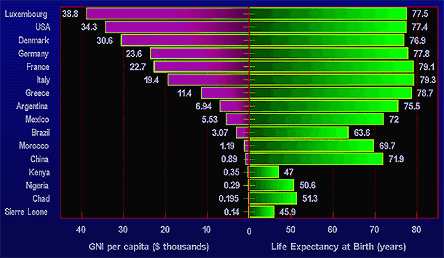
GNI = gross national income per person, World Bank April, 2003
Life Expectancy, World Factbook 2003, Central Intelligence Agency, May 31, 2003
The number of patients with ESRD who gain treatment is closely linked to annual per person income. The citizens in the wealthiest countries presently die from cardiovascular disease and not from uremia. Coincident with the expansion of ESRD patients on dialysis, waiting time for a deceased donor kidney transplant lengthened significantly (to a decade in the New York region). Not surprisingly, over the past decade, the number of deceased donor kidneys actually transplanted remained static at about 8,000.(1) As a consequence, physicians have increasingly relied on transplantable kidneys harvested from extended donors (previously excluded because of advanced age or with disorders such as proteinuria) and from living unrelated donors. Nevertheless, these remedies fall short of meeting the need for donor kidneys and patients desiring a kidney transplant who lack a suitable intrafamilial donor are sentenced to remain on dialysis where their mortality exceeds that of a transplant recipient.
Also pertinent to an introduction to the quest for a bioartificial kidney is the reality that acute renal failure is associated with a poor prognosis in a hospital intensive care setting despite application of continuous renal replacement therapy, which has not improved survival compared to conventional hemodialysis.(2),(3) Even with the use of intensive treatment regimens, including hemofiltration and hemodiafiltration, and improved monitoring tools, acute renal failure in intensive care units remains lethal with mortality ranging from 50-79%.(4)
The Need for a Bioartificial Kidney
Because there is an expanding demand for renal replacement therapy both for ESRD and acute renal failure, investigators are attempting to devise innovative, low cost regimens that go beyond the partial therapeutic benefits of dialysis (whether hemo or peritoneal) and which may truly replace renal function. An additional constraint on future renal replacement regimens is that they be affordable within developing nations. While extraction of water and small molecular weight solutes is readily effected by current forms of dialysis based on a so-called artificial kidney, neither the metabolic nor endocrine function of the normal kidney are emulated and the baseline concentration of low molecular weight nitrogenous wastes remains elevated above normal levels in ESRD patients on dialysis.
Kjellstrand has aptly characterized current hemodialysis strategies as 'unphysiologic',(5) providing a total weekly glomerular filtration rate (GFR) of approximately 15 mL/min compared with the 100-180 ml/min attained by a healthy adult. Since the introduction of recombinant human erythropoietin in 1989 (see Figure 5), there has been no regimen-changing major advance in renal replacement therapy. Ideally, a "new therapy" should remedy current long-term complications of chronic renal replacement therapy (RRT) and thus enhance the quality of life of dialysis patients to a level at least equivalent to that of a kidney transplant recipient. Such a "dream therapy" should also be affordable, easy to use in ESRD and apply to the management of acute renal failure, which still has up to 79% mortality in critically ill individuals.
Figure 5. Improvement in 5-Year Survival Rate Has Plateaued.

Normal Kidney Function
In health, normal kidney function maintains homeostasis of body composition in response to changing intake of solutes and water. Concurrently, the kidney provides vital endocrine and immunologic functions, as illustrated in Figure 6.
Figure 6. Metabolic Kidney Functions.
| Excretory | Secretory |
| Minerals, Water Nitrogenous wastes Toxins, Medications |
Enzymes, Vitamin D Erythropoietin Prostaglandins |
Each kidney, approximately the size of an Idaho potato (10-14 cm long), contains about one million functional units termed nephrons.
Figure 7. Illustration of Native Kidney.

The nephron consists of a complex capillary filter (glomerulus) that originates in the outer portion of the kidney (cortex) and is contiguous with a long tubule that descends into an inner medulla. Across the glomerulus, a high flux transudation of fluid occurs to form an ultrafiltrate composed of plasma water and small solutes, such as sodium and other electrolytes, glucose, amino acids and nitrogenous wastes of protein catabolism (e.g., urea and creatinine) which travel through a long tubule. While in the tubule, the ultrafiltrate is exposed to transport proteins that add or remove solutes, reclaiming (resorbing) what is needed, while discarding (excreting) what is no longer necessary for health. Water elimination is also handled through a set of transport proteins and through the medullary concentration gradient.(6)
Hormones secreted by the kidney include renin, erythropoietin, prostaglandins and 1,25-dihydroxy vitamin D. Additionally, the kidney is a source of cytokines including nitric oxide and endothelin, and contributes to key metabolic processes such as gluconeogenesis, ammoniagenesis, catabolism of peptide hormones and growth factors, and synthesis of glutathione.
Currently Available Renal Replacement Therapy
ESRD patients contemplating their future are able to select (in affluent nations) from among three available modalities of renal replacement therapy, with a fourth option -- no therapy -- that implies near term death. A functioning kidney transplant is the best option for uremia therapy but, as noted above, is unavailable for the majority of incident ESRD patients. Dialysis therapies, both peritoneal dialysis and hemodialysis, extract clear water and small molecules such as sodium and urea but rely on nondialytic external protocols to partially substitute for the diseased (or absent) kidney's impaired endocrine and metabolic functions. Thus a typical ESRD patient receives regular injections of erythropoietin at the time of hemodialysis and ingests synthetic vitamin D.
Dialysis-treated ESRD patients also have deficient immunoregulatory activity. Normally, proximal tubular cells function as antigen presenting cells while synthesizing inflammatory cytokines.(7) Proximal tubular cells also express CD40,(8) which interacts with CD40 ligand, found on T cells, and induces expression of ICAM-1 and VCAM-1,(9) adhesion molecules that enhance the activation of T cells. We have only recently appreciated the contribution of the kidney to a healthy immune response. This renal immunologic role is a factor in immunologically-mediated injury, such as occurs in renal transplants, and also in critically ill patients who have systemic inflammatory response syndrome, where renal tubular cells may aid in host defenses.
Living with a kidney transplant improves endocrine function and quality of life but, as already stated, the need far outweighs the supply of organs, maintenance care is very expensive and, as survival improves, more patients will need second and third transplants, thus further intensifying demand for harvestable organs. On the bright side, given the sophistication intrinsic in a health kidney, it is remarkable that dialysis patients may live for decades despite the inadequacy of current renal replacement therapy.
Stem Cells and the Kidney
Most viable therapies for kidney failure are based on the use of stem cells.(10) Stem cells are thus called because of their ability to self-renew and to differentiate into different cell lines. Some are totipotent able to give rise to all three embryonic germ cells layers and the extraembryonic tissues. Others are said to be pluripotent -- they can develop into any of the three germ cells layers (but not extraembryonic tissue) -- while a third type, multipotent cells, can differentiate into multiple cells lines but not all three germ layers. Though embryonic stem cells are pluripotent, their use has generated political controversy and impeded research. Therefore, multipotent adult hematopoietic stem cells have been the focus of research.
These adult hematopoietic stem cells are easily accessible, avoid issues of immunogenicity because they may come from the very person who requires the renal replacement therapy, and may be amenable to manipulation. So far, bone marrow derived stem cells have yielded conflicting results in renal replacement therapy and their widespread clinical use remains a distant objective. The ultimate goal of cell therapy is the production of an organ. This is a difficult challenge for the kidney because it has cell populations very different from one another in the glomerulus and the tubule. At this writing (January 2006), the adult kidney stem cell population is yet to be identified.
To date, cell-based renal replacement therapies have been based on a strategy of using a single differentiated cell line, the proximal tubular cell, expanding it in tissue culture, then pairing it to an extracorporeal circuit, termed a hemofilter, which mimics the filtration function of the glomerulus.
Figure 8. Proximal Tubular Cells in Culture.

Bioartificial Kidney: Acute Renal Failure
The renal tubule assist device (RAD), developed by H. David Humes at the University of Michigan, consists of a synthetic hemofilter connected in series with a bioreactor cartridge containing approximately 109 human proximal tubular cells. This device uses human adult kidney proximal tubular cells, which are expanded in culture and then grown along the inner surface of the fibers of a standard hemofiltration cartridge. Proximal tubular cells were isolated and expanded from human kidneys deemed unsuitable for transplantation due to anatomic or fibrotic defect. Cell attachment to the membrane is facilitated by first coating the membrane with extracellular matrix molecules, usually murine laminin or bovine collagen type IV. Thus, the hemofiltration membrane serves as both a scaffold and an immune barrier for the cells lining its inner surface.
Figure 9. Electron Micrograph of Proximal Tubular Cells on Supportive Scaffolding.

RAD is connected in series to a continuous venovenous hemofiltration (CVVH) pump circuit system.
Figure 10. RAD Device.

A hemodialysisfilter connected in series with proximal tubular cells. Arrow points to the direction of blood flow.
Courtesy of H. David Humes
Blood is pumped from the CVVH circuit into the RAD space at a rate of 150 mL/min along with heparin and enters at a rate of 10 mL/min as ultrafiltrate. This ultrafiltrate passes into the tubule lumens of the RAD, enabling contact with cells lining the membrane and facillitating their metabolic functions. Cells within the device are maintained at 37°C and direct contact with the ultrafiltrate allows delivery of oxygen, growth factors and metabolic substrates. Blood is then returned to the patient at a rate of 5 mL/min and the remainder is discarded as "urine". Documentation of metabolic activity in renal cells coating the RAD device includes active transport of bicarbonate, glutathione catabolism ammonia production and activation of 25-hydroxy D3. Within the RAD, cell viability persists for up to six months.
Early experiments with uremic dogs(11) demonstrated that filtration, transport, metabolic and endocrine functions were successfully replaced by RAD, with later animal studies demonstrating metabolic renal replacement that resulted in higher IL-10 levels, an anti-inflammatory cytokine, and lower IL-6 and interferon levels, pro-inflammatory cytokines in swine with sepsis,(12) as well as longer survival. These encouraging data paved the way for the initial clinical use of RAD in 10 patients with acute tubular necrosis (ATN) in an intensive care unit(13) that demonstrated the maintained cellular viability during CRRT for 24 hours.
Observed adverse effects included moderate to severe hypotension or hypovolemia, thrombocytopenia, but no bleeding episodes, and one patient with hypoglycemia. Metabolic functions of RAD were evidenced by glutathione metabolism and 1,25-Vit D3 activation. Significant reduction in cytokines such as IL-6 and to a lesser degree IL-10 may have reflected persistent immunomodulatory function within renal tubular cells. This trial demonstrated the safety and viability of RAD with CRRT and encouraged the investigators to conduct further evaluation.
Recently, a phase II clinical trial in which the RAD device was employed in 58 critically ill patients with dialysis-depended acute renal failure was completed(14) After six hours of CVVH, matched patients were randomized to CVVH with (35 patients) or without (18 patients) RAD, and mortality was compared. At 28 days, patients on CVVH had 55.6% mortality compared to 34.3% mortality for those with CVVH and RAD. These encouraging results represent a positive preliminary assessment of the value of RAD in humans that must be confirmed on a larger scale. Nevertheless, should these results be validated, application of a bioartificial kidney may be the first 'revolutionary' advance in management of acute renal failure since the introduction of exogenous erythropoietin.
Bioartificial Renal Tubule Device with llc-pk1 Cells for CRF
While repeated hemodialysis provides excellent blood filtration of solutes, the therapy does not replace metabolic, endocrine, excretory and reabsorptive renal tubular functions. As an example of the problems with hemodialysis per se, note that Beta2 microglobulin is not cleared from blood and its accumulation can lead to amyloidosis with arthropathy, a common complication of the long-term hemodialysis survivor. Similarly, accumulated levels of advanced glycosylated endproducts (AGEs), another large molecule not removed by conventional hemodialysis, especially in diabetic patients with renal failure, may lead to amyloidosis and atherosclerosis.
Humes believes that to achieve a chronic, life-sustaining therapy with a bioartificial kidney, the bioartificial tubule must function for 3-4 weeks without systemic anticoagulation. To test this hypothesis, Lewis lung cancer-porcine kidney 1 (LLC-PK1) cells were seeded inside polysulfone hollow fiber modules and grown to confluence, whereby cells attach to one another and cover the surface they are on uniformly, by a team in Japan exploring the adoption of the RAD in chronic renal failure.(15) [A major challenge is the requirement to supply confluent, functioning tubular cells as a lining for the inner surface of the hemofilter, which must function for long intervals without anticoagulation.] The Lewis cell line was chosen because of its similarity to renal epithelial cells and because of its fast growth expansion and sustained viability after manipulation. LLC-PK1 cell line becomes confluent after 24 hrs of incubation, as opposed to the human cells that line Humes' RAD device, that take 14 days to reach confluence.
The LLC-PK1-lined device was able to transport water glucose and sodium for up to 10 days, after which cells became multilayered and obstructed the hollow fibers. Ozgen et al. also demonstrated that aquaporin-1 transfected LLC-PK1 cells had twice the osmotic water permeability of untransfected cells.(16) [Transfection is the transfer of a gene to a cell that does not inherently possess it.] Whether this version of the RAD will prove of clinical value has yet to be demonstrated.
Nanomedicine
The marriage of biology to advanced modern technology yielded another development that may alter the direction of clinical nephrology -- the human nephron filter (HNF).(17) This experimental artificial membrane is based on nanotechnology, which develops anatomically precise functional machine systems on the scale of a nanometer.(18)
The HNF is a one-cartridge device that contains two membranes in series. The first membrane is the G membrane, which mimics the glomerulus and uses convection to form an ultrafiltrate with solutes approaching the molecular weight of albumin. The ultrafiltrate then passes through the T membrane, which mimics the tubule. This second membrane selectively designates which solutes are reclaimed through channels specifically designed using nanotechnology.
These channels are molecularly engineered to allow passage of molecules through specific interaction with the solute rather than through passive diffusion. The number and size of channels are pre-determined. This system does not use dialysate and is computerized to operate 12 hours, 7 days a week, and should theoretically provide 30 mL/min of GFR. Still hypothetical, this nanomedicine system has yet to be built. A conceptual drawing is provided in Figure 11.
Figure 11. Wearable Human Nephron Filter.

In the center is the device with the G and T membranes. A high capacity battery would be worn on a belt and vascular access would be obtained as in conventional dialysis.
From Hemodial Int. 2005: 9(3);210-7.
Bioencapsulation
Another form of biotechnology that holds promise in uremia therapy is the use of bioencapsulated living cells in a regimen of probiotic (i.e., promoting the growth of living organisms which beneficially affect the host animal) oral therapy.(19) In one construct nearing human clinical trial, selected bacteria that convert nitrogenous waste into non-toxic compounds are encapsulated to effect a transformation from nitrogen end products such as urea to nitrites and nitrates that may be recycled within the living subject. This is a novel approach to an old idea: using the gut for dialysis(20) This approach was first reported by Pendleton, who infused intravenous urea to anephric dogs with serum level of 259 mg/dL and found a level of 299 mg/dL in their gut. In 1948, Vermooten reported gastric lavage successfully treated a uremic individual and in 1951 favorable use of a double-ended ileostomy was reported.(21)
Figure 12. Using Bowel for Dialysis.
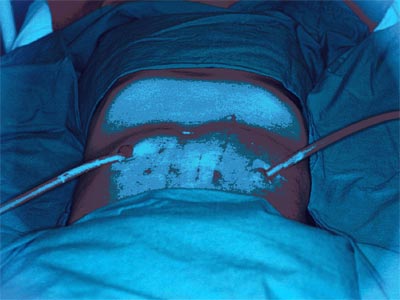
Paul Schloerb. 1958.
Given that we still administer activated charcoal by mouth to treat some cases of poisoning, it is not surprising that oral gastrointestinal sorbents might have application in treating uremia. Fecal loss of nitrogenous wastes through diarrhea inducing therapy has also been shown to alleviate uremia as was tried on 17 uremic individuals in Taipei for two years, who had to undergo 3-7 hours of diarrhea thrice weekly.(20) Diarrhea is used clinically today as an acute treatment of hyperkalemia in the form of sodium-polystyrene with sorbitol (kayexalate).
The idea to administer encapsulated bacterial enzymes to break down toxic substances was introduced in Helsinki in 1978.(22) Setäla appreciated that ruminants harbor bacteria within their gut that are capable of recycling urea and other nitrogen compounds. He cultured bacteria from the cow, grew them in large vats and prepared an "enzyme therapy" subsequently tested in azotemic patients. Chang and associates translated this concept into a live bacterial therapy by treating partially nephrectomized rats with microencapsulating urease producing E. coli, reporting their protracted survival in 1996.(23) Pursuing the live bacteria preparation, a series of probiotics, foods that contain 'beneficial' bacteria, Lactobacillus, Bacillus Pasteurii and E. coli DH5, in combination with oral charcoal and locust bean gum, have been prepared and tested in volunteers as the first oral renal replacement therapy in pill form.
Figure 13. Renal Replacement Therapy in a Pill.

Animal studies with nephrectomized rats(24) and miniature pigs demonstrated decreased urea levels and prolonged survival of treated animals, though human trials are still in the planning phase.
Summary: Future Options
Kidney failure is treatable even though anatomical damage to host kidneys persists. Currently, available modalities of maintenance hemodialysis, peritoneal dialysis are prohibitively expensive, and not enough donor organs are available for kidney transplantation. Although the bionic kidney holds great promise, its greatest use will probably be in acute renal failure. If it is successfully adapted to treat chronic renal failure, it, too, will be prohibitively expensive and will require very highly trained personnel. It is therefore necessary to develop new approaches to replace renal function that the world can afford. The ultimate in renal replacement therapy would be a regimen that restores the patient's quality of life to where it was with normal renal function. All renal replacement therapy is inadequate until that holy grail is found.