Course Authors
Sara R. Collins, Ph.D., Karen Davis, Ph.D., Cathy Schoen, M.S., Michelle M. Doty, Ph.D., Sabrina K. H. How, and Alyssa L. Holmgren
Release Date: 09/20/2005
Upon completion of this Cyberounds®, you should be able to:
Discuss older Americans' concerns with respect to financial and health security
Discuss the relationships between health status and economic status
Discuss the attitudes and opinions of older Americans with respect to proposed new health strategies.
Support for this research was provided by The Commonwealth Fund. The views presented here are those of the authors and not necessarily those of The Commonwealth Fund or its directors, officers or staff.
Annual growth in U.S. health care costs is outstripping yearly increases in workers' wages by a substantial margin. In 2004, employer health insurance premiums jumped by 11 percent -- their fourth year of double-digit inflation -- while average wages climbed by less than three percent.(1) Employers are responding to rising premiums by shifting more of their costs to employees in the form of greater premium contributions, higher deductibles, larger copayments, and/or slower wage increases.(2) Some employers, particularly small firms, are dropping coverage altogether.
The combination of rising out-of-pocket health care costs and sluggish wage growth threatens workers' ability to save for retirement. This is particularly true for older workers, ages 50 to 64, whose per-capita health care expenditures are more than twice that of younger workers. In addition, the continuing erosion of retiree health coverage in companies across the country means that health costs could claim an increasingly large share of older adults' savings after retirement.(3)
From September to November of 2004, The Commonwealth Fund surveyed older adults to determine their attitudes and behaviors with respect to financial and health security. This Cyberounds®, adapted from The Commonwealth Fund report of June 2005, reports the survey findings.
Survey Methodology
The survey was administered by International Communications Research from September 14 through November 21, 2004. It consisted of 25-minute telephone interviews in either English or Spanish and was conducted among a random, nationally representative sample of 2,007 adults ages 50 to 70 living in the continental United Sates. The study included 1,591 adults ages 50 to 64 and 416 adults ages 65 to 70. Statistical results were weighted to make the results representative of all adults ages 50 to 70 in the continental United States. The Appendix includes a complete explanation of the survey methodology.
Overview
The Commonwealth Fund Survey of Older Adults finds widespread support among older adults for policies that would help them save for their future health and long-term care costs. It also finds broad support for policies that would allow them to buy into Medicare before age 65.
Older adults too young to qualify for Medicare who are uninsured or have coverage on the individual market are particularly at risk of high out-of-pocket costs. Majorities of older adults with Medicare say that becoming eligible for Medicare was very important. Compared with those with other forms of coverage, Medicare beneficiaries say they have an equal or greater choice of doctors, fill out less paperwork, have fewer problems getting their insurance to pay their doctors, and are equally or more satisfied with the quality of their health care and confident in their ability to receive the best medical care available when needed. However, the survey also finds evidence of financial vulnerability among Medicare beneficiaries, stemming from Medicare's cost-sharing requirements and lack of coverage for high-cost services such as long-term care.
Survey Findings
Senior Health
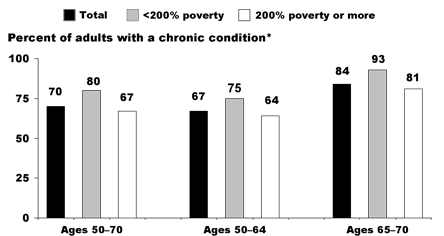
The survey asked respondents whether a doctor had told them that they had any of six chronic conditions: hypertension or high blood pressure, heart disease or heart attack, cancer, diabetes, arthritis, or high cholesterol. Seventy percent of those 50 to 70 reported that they had at least one of these six conditions (Figure 1).

Figure 1. Older Adults Have High Rates of Chronic Conditions.*
*Includes hypertention/high blood pressure, heart disease/heart attack, cancer, diabetes, arthritis, or high cholesterol.
Source: The Commonwealth Fund Survey of Older Adults (2004).
The rate of reported health problems increases dramatically with age, rising from 67 percent among those ages 50 to 64 to 84 percent in the 65-to-70 age group.(4) Chronic conditions are most common among older adults in low-income families. In households with incomes under 200 percent of poverty, three-quarters of those 50 to 64 and 93 percent of those 65 to 70 reported at least one chronic health problem.
The survey also asked people to describe their health status and whether they had a disability that prevented them from fully participating in work or other daily activities such as housework. More than one of five (22%) older adults described their health as either fair or poor and 23 percent had a limiting disability.
Reports of fair or poor health status were dramatically higher among those in low-income households: 46 percent of adults 50 to 64 in households with income under 200 percent of poverty reported that their health was fair or poor compared with 14 percent of those in higher-income households. Likewise, older adults in low-income households were far more likely to report a limiting disability. Nearly half (48%) of adults 50 to 64 with income under 200 percent of poverty reported a disability, nearly three times that the rate of adults ages 50 to 64 with higher incomes.
Unstable Health Insurance Coverage
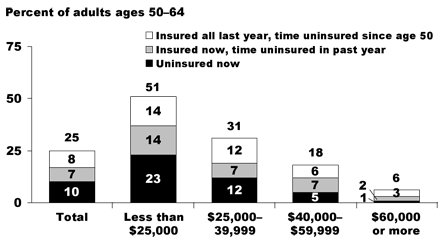
Despite these high rates of chronic conditions, the survey found that 12 million older adults were uninsured or had histories of unstable coverage. Among adults ages 50 to 64, approximately 10 percent, representing five million people nationwide, were uninsured at the time of the survey (Figure 2). An additional seven percent, or three million, had coverage at the time of the survey but had experienced a period without insurance in the past year. An additional eight percent of respondents, or four million, had been covered in the last year but spent some time without coverage since turning 50.
Figure 2. Insurance Instability Among Adults Ages 50-64 Is Highest Among Those with Low Incomes.
Note: Income groups based on 2003 household income.
Source: The Commonwealth Fund Survey of Older Adults (2004).
People with low incomes report particularly high rates of unstable coverage. More than half (51%) of adults 50 to 64 with incomes less than $25,000 were uninsured when surveyed, had a time without coverage in the past year, or were without coverage at some point since turning 50 (Figure 2). By contrast, just six percent of older adults earning more than $60,000 reported a time without coverage.
New Medicare Health Accounts and Early Access to Medicare
A substantial majority of respondents, 69 percent, said they would be interested in having one percent of their earnings deducted from their paychecks and placed into a Medicare account, which they could then use to pay for long-term care or other expenses that are not covered by Medicare. There was broad-based, majority support across income, region of the country, health status, and political affiliation. Interest was highest among adults in their early 50s (Figure 3).(5)
Figure 3. Majorities of Adults Across Political Affiliation Express Interest in Medicare Health Accounts.*
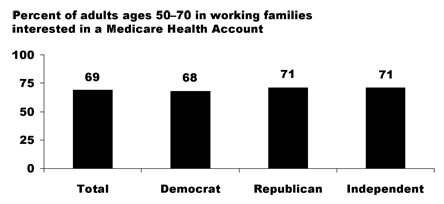
*Respondents were asked: "Thinking about paying for your healthcare in the future, would you be interested in having 1% of your (and/or your spouses') earnings deducted from your paycheck(s), tax-free, and placed in your own Medicare account(s) to use for long-term care or other expenses not covered by Medicare?
Source: The Commonwealth Fund Survey of Older Adults (2004).
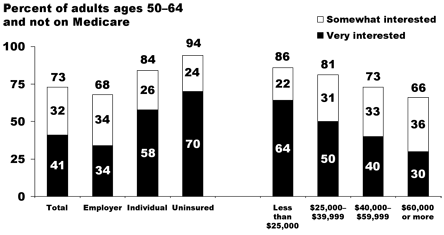
Nearly three-fourths (73%) of adults ages 50 to 64 said they would be very or somewhat interested in receiving Medicare before age 65. Majorities of older adults across the income spectrum expressed support for this option (Figure 4). A majority would be willing to pay at least a small premium to participate but the benefit would likely have to be subsidized to facilitate participation.
Figure 4. Percent of Adults Ages 50-64 Who Are Very/Somewhat Interested in Receiving Medicare Before Age 65, by Insurance Status and Income.
Source: The Commonwealth Fund Survey of Older Adults (2004).
Consolidating Medicare Coverage
Half of Medicare beneficiaries (50%) said they would be very or somewhat interested in paying an extra $100 per month to have all their health services, including prescription drugs, covered under one plan.
Fifty per cent (50%) ages 50 to 70 expressed interest in participating in an arrangement in which Medicare or their insurance plan charged them a lower monthly premium if they agreed to go to doctors that provided the best care at the lowest cost, even if it meant they had to change their doctors. Only a third (34%) of those 65 to 70 expressed interest.
Just over one-third (36%) of all respondents agreed that Medicare or their insurance plan should require them to sign up for a doctor that would be their regular source of care. Those ages 65 and older were the most opposed to the idea: less than a quarter (24%) agreed that Medicare should require them to have a regular doctor.
Higher Premiums: Older Adults with Individual Coverage
In most states, underwriting practices in the individual market take into account age and health status. Because age places older adults in a higher risk category for chronic health problems and catastrophic illness, they face much higher premiums for individual coverage than their counterparts with Medicare or employer coverage.
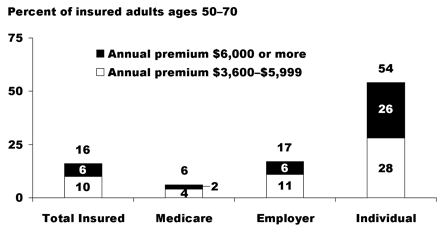
More than half (54%) of older adults with coverage on the individual market spend $300 or more per month, or $3,600 or more annually, on premiums and a quarter (26%) spend $500 or more a month, or $6,000 or more annually (Figure 5). In contrast, only 17 percent of older adults with employer coverage and six percent of those with Medicare spend in excess of $3,600 per year on premiums.
Figure 5. More than Half of Older Adults with Individual Coverage Spend $3,600 or More Annually on Premiums.
Source: The Commonwealth Fund Survey of Older Adults (2004).
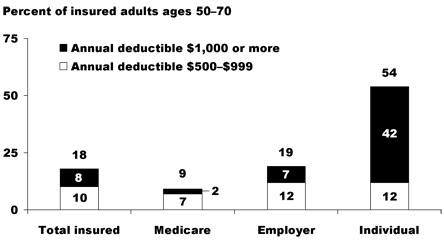
Even though they pay far more in premiums, older adults with individual coverage face much higher deductibles than those with employer coverage or Medicare. More than two of five (42%) older adults with individual coverage have deductibles of $1,000 or higher (Figure 4). In fact, nearly a quarter (24%) of older adults with individual coverage must meet annual deductibles of $2,000 or more per year. Just two percent of Medicare beneficiaries and seven percent of older adults with employer coverage face deductibles of $1,000 or more per year (Figure 6).
Figure 6. More than Two of Five Older Adults with Individual Coverage Have Annual Deductibles of $1,000 or More.
Source: The Commonwealth Fund Survey of Older Adults (2004).
Higher Out-of-pocket Costs
The out-of-pocket costs among older adults with individual coverage, excluding premiums, are similar in magnitude to those among uninsured older adults. The survey found that 36 percent of uninsured older adults and 35 percent of older adults with coverage through the individual market spent $1,000 or more per year on out-of-pocket health care costs, including prescription drugs. About 20 percent of those with employer-based coverage or Medicare spent this much (Figure 7).
Figure 7. Annual Out-of-Pocket Medical Expenses, Including Prescription Drugs.*

*Does not include premiums.
Source: The Commonwealth Fund Survey of Older Adults (2004).
Less Prescription Drug Coverage
Older adults with individual insurance are also much less likely to have coverage for drugs than those with employer coverage. Nearly 30 percent of older adults with individual insurance lack prescription drug coverage compared with five percent of those with employer coverage. One-third of Medicare beneficiaries lack drug coverage. The new Medicare drug benefit that takes effect in 2006 will help to fill this gap.
High Costs = Access and Medical Bill Problems
Nearly a quarter (24%) of older adults said that they had failed to get health care services because of cost, including not filling a prescription, not seeing a doctor or specialist when needed, or skipping a medical test or follow-up treatment. Fifty-seven percent of uninsured older adults and nearly a third (32%) of those with individual coverage reported at least one such access problem (Figure 8).
Figure 8. Access Problems Because of Cost.
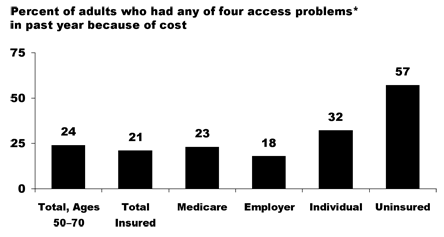
*Did not fill a prescription; did not see a specialist when needed; skipped medical test, treatment, or follow-up; did not see doctor when sick.
Source: The Commonwealth Fund Survey of Older Adults (2004).
More than one-third (35%) of older adults either had a problem paying their medical bills in the last 12 months or were paying off medical debt they had accrued over the last three years. Medical bill problems included having difficulty or not being able to pay bills, being contacted by a collection agency concerning outstanding bills, or making significant life changes in order to pay bills. Those who were uninsured, purchased coverage on the individual market, or had Medicare had the highest rates of problems (Figure 9).
Figure 9. More than One-Third of Older Adults Report Medical Bill Problems.
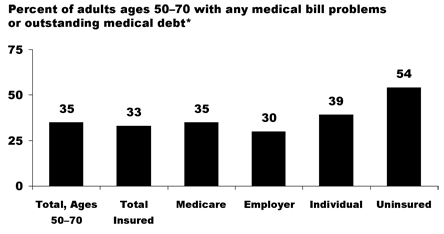
*Problems paying/not able to pay medical bills, contacted by a collection agency for medical bills, had to change way of life to pay bills, or has medical debt being paid off over time.
Source: The Commonwealth Fund Survey of Older Adults (2004).
The Importance of Becoming Covered by Medicare
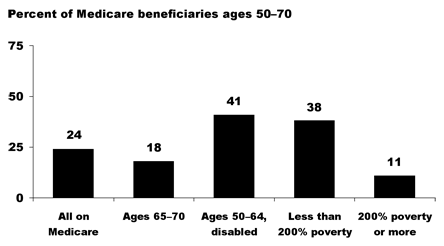
Many older adults lack insurance coverage just before becoming eligible for Medicare. Roughly one-quarter (24%) of Medicare beneficiaries reported that they were uninsured before they entered Medicare (Figure 10). This is a particular problem among people whose disability prevents them from working but who must wait two years before becoming eligible for Medicare.(6)
Among adults ages 50 to 64 who are eligible for Medicare because of a disability, more than two of five (41%) said that they were uninsured just before becoming eligible. In addition, a high rate of Medicare beneficiaries with low incomes reported being uninsured prior to Medicare -- 38 percent of those with incomes under 200 percent of poverty were uninsured.
Figure 10. Percent of Medicare Beneficiaries Who Were Uninsured Just Before Medicare.
Source: The Commonwealth Fund Survey of Older Adults (2004).
One-quarter (24%) of Medicare beneficiaries reported that they were uninsured just before they entered Medicare. Among adults 50 to 64 who are eligible for Medicare because of a disability, more than two of five (41%) said they were uninsured just before becoming beneficiaries.
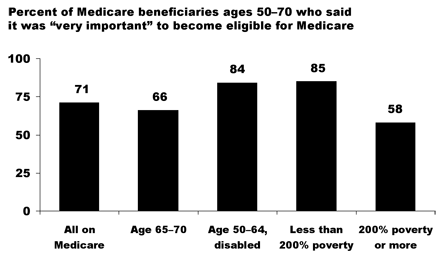
A substantial majority (71%) of Medicare beneficiaries ages 50 to 70 said that becoming eligible for Medicare was very important (Figure 11). Those who were disabled or lived in low-income households perceived Medicare eligibility as particularly essential. Even among higher-income families, a majority or respondents regarded Medicare eligibility as very important: 58 percent of those with household incomes of 200 percent of poverty or more.
Figure 11. Importance of Becoming Eligible for Medicare.
Source: The Commonwealth Fund Survey of Older Adults (2004).
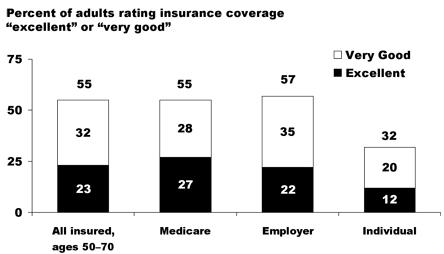
The survey asked respondents to rate all of their current health insurance coverage, which in the case of Medicare beneficiaries might also include retiree health benefits, supplemental insurance, or Medicaid. Medicare beneficiaries rate their overall health insurance coverage as high as those with employer-based coverage and much higher than those with coverage purchased through the individual market (Figure 12). In contrast, only one-third (32%) of respondents who had purchased coverage on the individual market rated their insurance as excellent or very good.
Figure 12. Ratings of Insurance Coverage.
Source: The Commonwealth Fund Survey of Older Adults (2004).
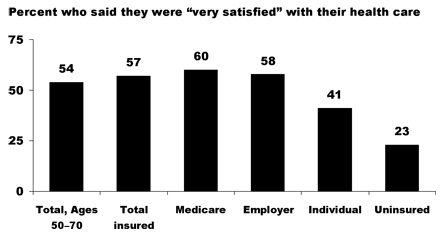
Medicare beneficiaries and older adults with employer coverage are the most satisfied with the quality of their health care (Figure 13). In contrast, only two of five (41%) older adults with individual coverage said they were very satisfied with their care. Uninsured older adults reported the least satisfaction with the quality of their care: less than a quarter (23%) said they were very satisfied.
Figure 13. Medicare Beneficiaries and Older Adults with Employer Coverage Are Most Satisfied with Health Care Quality.
Source: The Commonwealth Fund Survey of Older Adults (2004).
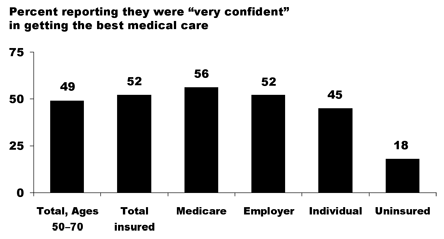
Older adults with Medicare or employer coverage also expressed the most confidence that they could obtain the best medical care available when needed. More than half of those with Medicare (56%) and employer coverage (52%) said they were very confident they could get the best available care compared with 45 percent of those with individual coverage (Figure 14).(7) Uninsured older adults expressed the least confidence in their ability to obtain the best care: only 18 percent said they were very confident.
Figure 14. Medicare Beneficiaries and Older Adults with Employer-Sponsored Coverage Are Most Confident in Getting the Best Medical Care.
 >
>
Source: The Commonwealth Fund Survey of Older Adults (2004).
Future Concerns: Health and Financial Security
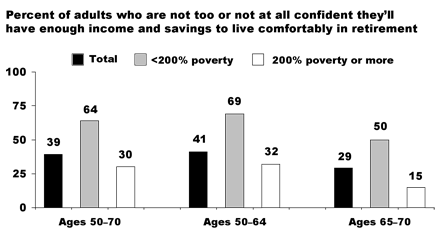
Respondents were asked how confident they were that they would have sufficient income and accumulated savings to live comfortably in retirement. Nearly two of five (39%) older adults ages 50 to 70 said they were not too confident or not at all confident they would have enough money for their retirement (Figure 16). The generation aging into retirement was less confident than older adults already eligible for Social Security and Medicare: two of five (41%) of those ages 50 to 64 were not too/not at all confident compared with 29 percent of those 65 or older. Those with low incomes held the bleakest outlook. Among adults 50 to 70 with incomes under 200 percent of poverty, 64 percent said they were not too or not at all confident that they would have sufficient savings and income in retirement.
Figure 15. Two of Five Older Adults Are Not Confident in Their Retirement Security: Older Adults with Low Incomes Are the Least Confident.
Source: The Commonwealth Fund Survey of Older Adults (2004).
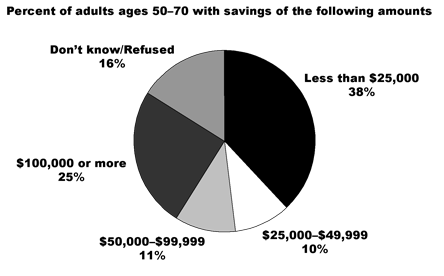
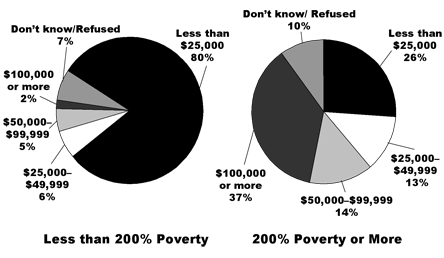
Older adults' lack of confidence in their retirement savings is not without basis. The survey asked respondents how much money they had saved for retirement, including savings accounts and stock holdings but excluding their homes. Nearly half (48%) of adults ages 50 to 70 have retirement savings of less than $50,000 and nearly two of five (38%) have savings of less than $25,000 (Figure 16). Among older adults ages 50 to 70 with household incomes under 200 percent of poverty, 80 percent had accumulated savings of less than $25,000 (Figure 17). Yet, even higher-income families struggle to save: a quarter (26%) of adults ages 50 to 70 with incomes of 200 percent or more of poverty had savings of less than $25,000.
Figure 16. Total Bank or Stock Market Savings.
Source: The Commonwealth Fund Survey of Older Adults (2004).
Figure 17. Total Bank or Stock Market Savings, by Income, Adults Ages 50-70.
Source: The Commonwealth Fund Survey of Older Adults (2004).
Retiree health benefits offered by employers have historically accorded retirees substantial protection from medical costs by providing coverage before they become eligible for Medicare and by covering services that Medicare has not covered, such as prescription drugs. The survey asked retirees whether they had retiree health insurance from an employer and asked those in working families whether they expected to have benefits. Fewer than half of older adults have or expect to have retiree health benefits from their own or their spouse's employer.
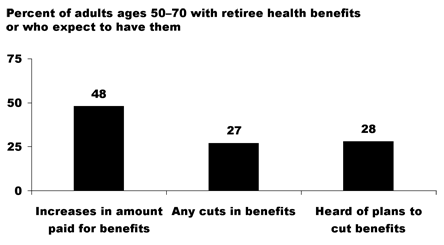
There are also signs of erosion in the quality of retiree health benefits. The survey found that nearly half (48%) of older adults who either currently have retiree health benefits or expect to have them reported increases in the amount they are required to pay out-of-pocket when they visit a doctor, fill prescriptions, or receive other medical services (Figure 18). Twenty-seven percent said that there had been actual cuts in the scope of services covered by the plan and 28 percent reported that they recently had heard of plans either to cut benefits or increase cost-sharing.
Figure 18. The Quality of Retiree Health Benefits Is Eroding.
Source: The Commonwealth Fund Survey of Older Adults (2004).
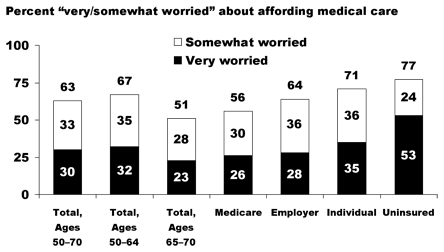
Against a backdrop of eroding retiree health insurance coverage, insufficient savings, and rapidly rising health care costs, majorities of older adults express fear that they will not be able to afford health care in the future. More than three of five (63%) older adults ages 50 to 70 said they were very or somewhat worried they might not be able to afford needed medical care in the future (Figure 19). Uninsured older adults or those with individual coverage were the most concerned about being able to afford health care: 77 percent of uninsured older adults and 71 percent of those with individual coverage were very or somewhat worried.
Figure 19. Majorities of Older Adults Are Worried They Won't Be Able to Afford Needed Medical Care.
Source: The Commonwealth Fund Survey of Older Adults (2004).
Older Americans Want New Health Strategies
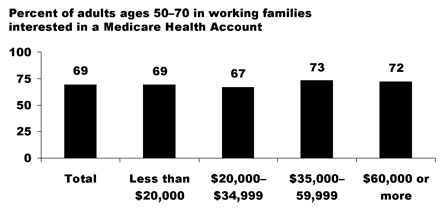
Concerned about not having enough income and savings to live comfortably in retirement, older adults are interested in new strategies to help them save for future health care costs. The survey asked older adults in working families if they would be interested in having 1 percent of their earnings deducted from their paychecks and placed into a Medicare account. They could then use their accumulated savings in their accounts to pay for long-term care or other health services that Medicare does not cover. A substantial majority of respondents, 69 percent, said they would be interested in participating in such an automatic savings plan (Figure 20). There was broad-based, majority support across income group, region of the country, health status, and political affiliation. Interest was higher among people in their early 50s.
Figure 20. Interest in Medicare Health Accounts Is Strong Across Income Group.*
*Respondents were asked: "Thinking about paying for your healthcare in the future, would you be interested in having 1% of your (and/or your spouses') earnings deducted from your pay check(s), tax-free, and placed in your own Medicare account(s) to use for long-term care or other expenses not covered by Medicare?"
Source: The Commonwealth Fund Survey of Older Adults (2004).
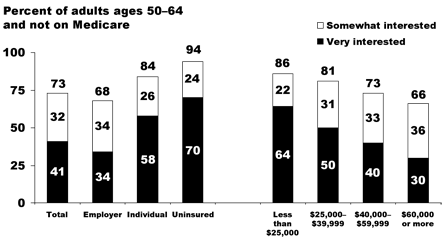
Older adults are worried about their exposure to rising health care costs and access to medical services and show interest in new options for health insurance coverage. The survey asked adults ages 50 to 64 if Medicare were available to their age group how interested they would be in having Medicare coverage before their 65th birthdays. Nearly three-fourths (73%) of adults ages 50 to 64 said they would be very or somewhat interested in enrolling in Medicare before age 65 (Figure 21).
Interest was highest among people with the least protection from health care costs. Ninety-four percent of uninsured older adults were very or somewhat interested in early participation in Medicare. Eighty-four percent of those with coverage purchased on the individual market were very or somewhat interested. In addition, a large majority (68%) of older adults with employer-based insurance coverage were interested in getting into Medicare.
While interest was highest among older adults earning less than $25,000 a year, a majority of those with incomes above $60,000 also were somewhat or very interested in receiving Medicare before age 65.
Figure 21. Percent of Adults Ages 50-64 Who Are Very/Somewhat Interested in Receiving Medicare Before Age 65, by Insurance Status and Income.
Source: The Commonwealth Fund Survey of Older Adults (2004).
A majority of older adults would be willing to pay at least a small monthly premium to join Medicare before age 65. Just over a quarter (26%) said they would be willing to pay up to $200 per month and another quarter (26%) would be willing to pay up to $100 (Figure 22). About 11 percent said they would pay no more than $50 monthly. The amount people were willing to pay rose with their incomes, with larger shares of those earning $40,000 a year or more willing to pay up to $200 monthly than those with lower incomes.
Figure 22. Amount Willing to Pay to Buy into Medicare Before Age 65.
| Total 50-64 | Less than $40,000 | $40,000 or more | |
|---|---|---|---|
| Percent of adults ages 50-64 and not on Medicare who are interested in buying into Medicare | 73% | 83% | 68% |
| Willing to pay $200 | 26 | 21 | 30 |
| Willing to pay $100, but not willing to pay $200 | 26 | 32 | 24 |
| Willing to pay $50, but not willing to pay $100 | 11 | 17 | 8 |
| Not willing to pay $50 | 5 | 10 | 3 |
| Don't know/refused to answer how much willing to pay | 5 | 4 | 5 |
Columns may not sum properly because of rounding.
Source: The Commonwealth Fund Survey of Older Adults (2004).
This finding suggests that premiums would have to be subsidized in order to facilitate early buy-in to Medicare. Assuming a community-rated annual premium of approximately $4,000, $200 per month would cover about 60 percent of premium costs, $100 would cover approximately 30 percent of premiums, and $50 would pay only 15 percent of premiums. Subsidies or tax credits for a buy-in could be linked to income, so that those with household incomes of less than 200 percent of poverty would pay no more than 5 percent of their income and those with higher incomes would pay no more than 10 percent.(8)
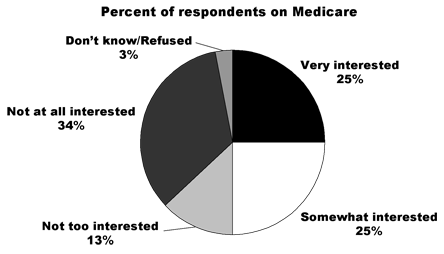
The survey also asked respondents how interested they would be in paying an extra $100 a month to Medicare to have all their health services, including prescription drugs, covered. A quarter of Medicare beneficiaries was very interested in this option and another quarter was somewhat interested (Figure 23).
Figure 23. How Interested Would You Be in Paying an Extra $100 per Month to Medicare to Have All Your Health Services, Including Rx, Covered?
Source: The Commonwealth Fund Survey of Older Adults (2004).
Conclusions
Older adults without adequate health coverage are at risk of suffering adverse health events from skipping needed care. They are also at risk of spending large shares of their income on out-of-pocket costs and accumulating medical debt. Poor health can erode older adults' ability to participate in daily activities and accumulate income prior to retirement. Moreover, if older adults postpone or do not receive essential care for chronic health conditions such as diabetes, arthritis, or high blood pressure, they are at risk of entering the Medicare program in deteriorating health and with much more costly medical conditions.
Yet, older adults are becoming less rather than better protected. According to the most recent U.S. Census data, the number of uninsured adults ages 50 to 64 climbed from 5.5 million in 2000 to 6.4 million in 2003. In addition, the percentage of large firms offering retiree health benefits dropped from 66 percent in 1988 to 36 percent in 2004. Many companies that still offer benefits are making them less generous. Hewitt Associates estimates that medical costs can add up to an estimated 20 percent of pre-retirement income for workers who retire at age 65 without employer health care benefits.
Early retirees without employer coverage can expect to spend an estimated 40 percent of pre-retirement income on their medical expenses. While the new Medicare prescription drug benefit will offset some of those costs for beneficiaries, older adults without retiree health benefits will continue to see a portion of their retirement income go toward health care costs.
Several targeted investments could improve the health and financial security of older adults. The survey shows strong interest among older adults in opening a Medicare health account to set aside income for long-term care and other health care expenses that are not covered by Medicare. In addition, a large majority of adults ages 50 to 64 is interested in participating in the Medicare program before the age of 65. To facilitate participation, subsidies or tax credits for a buy-in could be linked to income such that those with household incomes of less than 200 percent of poverty would pay no more than 5 percent of their incomes and those with higher incomes would pay no more than 10 percent. Finally, eliminating the two-year waiting period for the disabled in the Medicare program would directly address the financial hardship of that population so clearly evident in this survey.
Cutting back on the health care of older adults through the erosion of employee and retiree health benefits will serve only to worsen the health and financial status of older adults and magnify the financing issues currently looming before Medicare. Instead, targeted investments in their health care would likely make strides toward a more robust economy and a sustainable Medicare program.
Related Publications
Paying More for Less: Older Adults in the Individual Insurance Market -- Findings from the Commonwealth Fund Survey of Older Adults (June 2005). (http://www.cmwf.org/publications/publications_show.htm?doc_id=282104). Sara R. Collins, Cathy Schoen, Michelle M. Doty, Alyssa L. Holmgren, and Sabrina K. How. Survey findings reveal that adults ages 50 to 64 who rely on individual market insurance pay much higher premiums than their counterparts with employer coverage. Yet these older adults have far less comprehensive coverage and are more likely to face insurance restrictions and administrative complications.
Medicare Health Accounts: A New Policy Option to Help Adults Save for Health Care Expenses Not Covered by Medicare -- Findings from the Commonwealth Fund Survey of Older Adults (June 2005). (http://www.cmwf.org/publications/publications_show.htm?doc_id=282157). Sara R. Collins, Karen Davis, Sabrina K. How, and Alyssa L. Holmgren. Nearly seven of 10 older adults ages 50 to 70 said they would be interested in having a "Medicare Health Account," into which up to 1 percent of earnings could be deposited to cover retirees' costs of long-term care, home health, and other expenses not covered by Medicare.
A Shared Responsibility: U.S. Employers and the Provision of Health Insurance to Employees (Spring 2005). (http://www.cmwf.org/publications/publications_show.htm?doc_id=280373). Sara R. Collins, Karen Davis, and Alice Ho. Inquiry, vol. 42, no. 1 (In the Literature summary). Much of the health care costs of the nearly 36 million workers without job-based coverage are being picked up by other employers through dependent coverage, by public programs, and by employees themselves, this Fund study finds.
Insured But Not Protected: How Many Adults Are Underinsured? (June 14, 2005). (http://www.cmwf.org/publications/publications_show.htm?doc_id=280812). Cathy Schoen, Michelle. M. Doty, Sara R. Collins, and Alyssa. L. Holmgren. Health Affairs Web Exclusive (June 14, 2005). In addition to 45 million uninsured U.S. adults, another 16 million were underinsured in 2003, according to this study by Commonwealth Fund researchers. The authors find that inadequate coverage -- much like no coverage at all -- creates obstacles to care and other burdens.
Variations in the Impact of Health Coverage Expansion Proposals Across States (June 7, 2005). (http://www.cmwf.org/publications/publications_show.htm?doc_id=279903). Sherry Glied and Douglas Gould. Health Affairs Web Exclusive (In the Literature summary). While some states could reduce their uninsured rate by as much as 20 percent under federal proposals such as tax credits or public program expansions, other states might not see much change at all.
How High Is Too High? (April 2005). (http://www.cmwf.org/publications/publications_show.htm?doc_id=274007). Karen Davis, Michelle M. Doty, and Alice Ho. Commonwealth Fund researchers say tax incentives for the purchase of high-deductible health plans will have little effect on health coverage rates, because premiums are too high for the many uninsured Americans living near the poverty level.
The Effect of Health Savings Accounts on Health Insurance Coverage (April 2005). (http://www.cmwf.org/publications/publications_show.htm?doc_id=274002). Sherry Glied and Dahlia Remler. Fewer than 1 million of the nation's 45 million uninsured are likely to get new health coverage from health savings accounts coupled with high-deductible health plans, this issue brief finds.
Discount Medical Cards: Innovation or Illusion? (March 2005). (http://www.cmwf.org/publications/publications_show.htm?doc_id=263783). Mila Kofman, Jennifer Libster, and Eliza Bangit. As double-digit premium increases of the last four years have made health insurance unaffordable for many consumers, some businesses and individuals are using discount cards as a substitute for health insurance coverage.
Early Implementation of the Health Coverage Tax Credit in Maryland, Michigan, and North Carolina: A Case Study Summary (April 2005). (http://www.cmwf.org/publications/publications_show.htm?doc_id=271904). Stan Dorn, Tanya Alteras, and Jack A. Meyer. Despite a promising start, a federal tax credit program designed to help displaced workers buy health insurance is still experiencing disappointingly low enrollment rates more than a year after its implementation, according to the Economic and Social Research Institute.