Course Authors
David R. Thomas, M.D., and John E. Morley, M.D.
Release Date: 07/16/2002
Upon completion of this Cyberounds®, you should be able to:
Discuss the high prevalence of malnutrition in older persons
List the effects and side effects of different orexigenics
Discuss the rationale for treating malnutrition in older persons.
The drive to find food, designated by the term hunger, is essential to animal survival. Over a lifetime, considerable effort is expended seeking food. Hunger is controlled by chemical mediators, signaling when to stop eating (satiation), and when to resume searching for food (satiety), which defines the interval between meals. Appetite, defined here as the enjoyment of food for itself rather than for physiologic need, is conditioned by a number of social, cultural, and psychological factors, as well as by disease states.
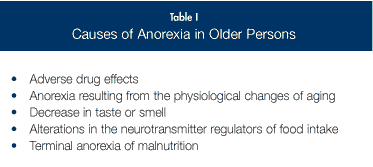
Accumulating evidence points toward anorexia, or the decline in appetite, as a contributor to weight loss and undernutrition of older persons.(1) The chief causes of anorexia in older persons are shown in Table 1.
Older persons consume less food than younger persons. On average, persons over the age of 70 years consume one-third fewer calories compared with younger persons, with energy intakes of older men (40-74 years old) in a range of 2100 to 2300 calories/day compared with younger men (24-34 years old) at 2700 calories/day.(2) In dietary intake studies, 10% of men and 20% of women have protein intakes below the U.S. Recommended Daily Allowance (RDA), and one-third consume fewer calories than the RDA. Fifty percent of older adults have mineral and vitamin intakes less than the RDA and 10% to 30% have subnormal levels of minerals and vitamins.(3) Sixteen to 18% of community-dwelling elderly persons consume fewer than 1000 calories/day.(4) Lower food intake by older adults seems to result from smaller meals eaten at a slower rate.(5)
Regulation of Appetite
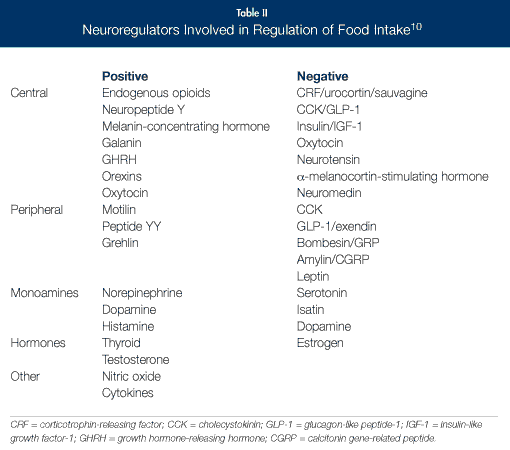
Appetite is regulated by combination of a peripheral satiation system and a central feeding drive. The interplay of these two systems is modulated by a hormonal feedback system that provides information on the nutrient status of the organism. The central feeding drive is modulated by factors including dynorphin, nitric oxide, neuropeptide Y, and corticotrophin-releasing factor. Gastrointestinal hormones, including cholecystokinin, gastrin-releasing peptide, amylin, somatostatin, and bombesin also regulate satiety in humans to varying degrees.(6)
The physiologic regulation of appetite differs fundamentally in older adults compared with younger persons. Neurotransmitter regulators of appetite have been implicated in decreased intake associated with aging. Impaired appetite contributes to undernutrition frequently found in older persons. Moreover, when older persons decrease their food intake, they appear to reset their ìappetostatî and then find it difficult to increase their food intake appropriately in response to a period of anorexia.(7) The changes in these regulatory hormones and their effect on undernutrition is poorly understood. The major regulators of appetite have been extensively reviewed(8),(9) and are delineated in Table 2.(10)
Pathological Causes of Anorexia
Anorexia may result from either pathological or physiologic causes in older persons. Acute illness results in a decline in nutrient intake in most species. This response seems paradoxical in the face of a need for increased nutrients during healing.(11) Several disease states induce cachexia, the cytokine-induced wasting of protein and energy stores. Cytokines are related to a number of disease conditions, including cancer,(12) end-stage renal disease,(13) chronic obstructive pulmonary disease,(14) congestive heart failure,(15) rheumatoid arthritis,(16) and AIDS.(17) Cytokines directly result in feeding suppression and lower intake of nutrients. Interleukin-1 beta and tumor necrosis factor (TNF) act on the glucose-sensitive neurons in the ventromedial hypothalamic nucleus (a ìsatietyî site) and the lateral hypothalamic area (a ìhungerî site).
The common causes of undernutrition in older persons are shown in Table 3.
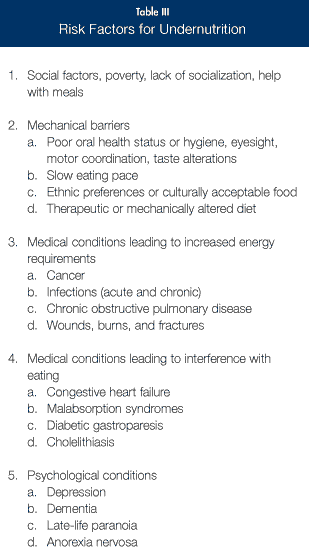
Using a series of questions for the differential diagnosis, the etiology of most causes of undernutrition can be determined.(22),(23) Recently, a structured algorithm to assist in evaluating causes of undernutrition was published by the Council for Nutritional Clinical Strategies in Long-Term Care.(24)
Sociological, Psychological & Physiologic Causes of Anorexia
In addition to the pathological causes of anorexia, appetite is greatly influenced by sociological, psychological, and physiologic factors (Table IV).
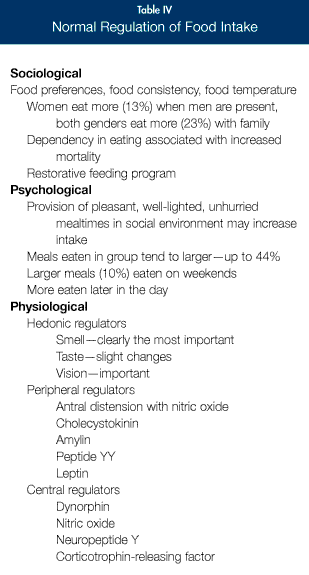
Sociological factors include food preferences, chiefly determined by cultural circumstances.
Studies have shown that consideration of food preferences, consistency, and temperature may increase food intake.(25),(26) Older persons modulate food intake by time of day, number of people present, premeal stomach contents, and their subjective state of hunger in a way similar to that of younger persons. Women eat more (13%) when men are present, and both genders eat more (23%) with family present. Meals eaten in groups tend to be up to 44% larger than those eaten alone. Larger meals (10%) are eaten on weekends rather than weekdays, and larger meals are eaten later in the day.(5) Provision of pleasant, well-lighted, unhurried mealtimes in a social environment may increase the intake.(27) During meals-on-wheels deliveries, if the person delivering the meal stays while the older person eats, nutritional risk is reduced.(9) These data suggest that intake may be improved in older persons by paying attention to these sociologic factors.
Psychological factors have a tremendous impact on appetite. Depression is one of the most common reversible causes of weight loss in elderly persons, accounting for up to 30% of undernutrition in medical outpatients.(21) Depression is a cause of undernutrition in up to 36% of residents who lose weight in nursing homes.(28),(29) In nursing home residents, ìfailure to thriveî has been closely correlated with depression.(30)
Tricyclic antidepressants and monoamine oxidase inhibitors are more likely to produce weight gain thanthe selective serotonin reuptake inhibitors or the newer antidepressants. Mirtazapine appears to be particularly useful in stimulating appetite.(31) Clinical trials report weight gain as the most common side effect of this agent.(32),(33),(34) Whether this effect can be translated into long-term care settings for the treatment of depression in older adults with weight loss has not been studied.
Physiologic changes in the hedonic qualities of food occur universally with aging. These are due particularly to a decline in olfaction(35) and to taste(36) that occur with aging. These changes in taste and smell are extremely important in nursing home residents. Residents often complain about the quality of food in nursing homes. Much of this is due to the physiologic alterations in taste and smell, which makes food appear less ìtastyî as people age. The alterations in the ability to appreciate the taste of food (most of this is due to decreased olfaction) means that in the nursing home, food presentation and food choice can play a more important role than does the actual taste of the food.
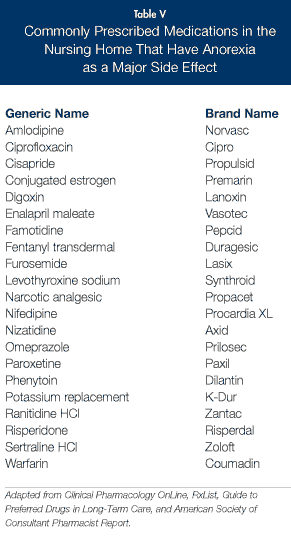
While the ability to smell declines in all individuals, the changes in taste are more variable. Persons who have smoked are more likely to have declines in taste. The major change in taste results in an increase in the threshold at which one can recognize a taste. However, the most common alteration in taste in older persons stems from the effects of drugs and diseases, rather than the physiologic changes of aging. Drugs that have an effect on taste and appetite are listed in Table 5.
Flavor amplification may enhance food palatability and acceptance, stimulate salivary flow, and reduce complaints concerning the oral cavity. Flavor enhancers have been shown to produce a tendency for ingestion of greater quantities of food and improved food preference.(37)
The presence of fat in the diet contributes much of the taste of food. Restriction of salt may make food unpalatable. Unpalatability due to overly restricted diets may cause decreased intake.(38) Special or restrictive diets (low cholesterol, low salt, no concentrated sweets) often reduce food intake without significantly helping the clinical status of the resident. For example, a regular diet does not affect glucose control in nursing home residents with diabetes.(39)
Management Considerations in Anorexia
In addition to sociological, psychological, and physiologic approaches to improving appetite, pharmacologic appetite stimulants should be useful in overcoming the physiologic anorexia of aging. Orexigenic drugs should be considered if all standard environmental and nutritional interventions fail. These drugs may help to prevent further morbidity and enteral feeding. No drug has received U.S. Food and Drug Administration approval for geriatric anorexia (Table 6).
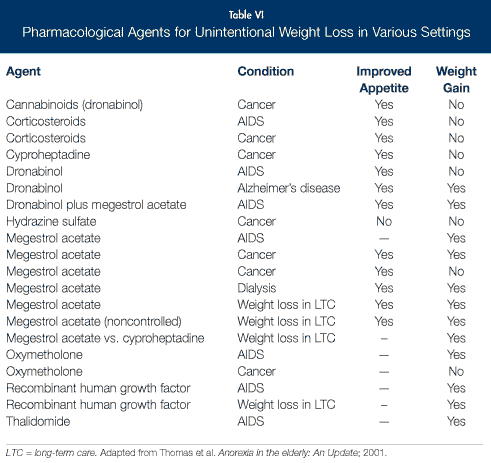
Cannabinoids have shown promise in improving mood and appetite in cancer patients(40),(41) and in AIDS-related cachexia.(42) Jatoi et al(43) found a 49% improvement in appetite in advanced cancer patients receiving dronabinol. Dronabinol is a promising novel therapeutic agent that may be useful not only for treatment of anorexia, but also to improve disturbed behavior in patients with Alzheimer's disease. Body weight increased more during the dronabinol treatment than during the placebo periods.(44) In addition, somewhat less agitation was seen in treated patients. Because of the risk of delirium, dronabinol should be started at 2.5 mg before bed for one week, then given at 2.5 mg before dinner. If no response is seen, 2.5 mg can also be administered before lunch. Dronabinol has also been used to treat intractable nausea and vomiting.(45)
In randomized, placebo-controlled trials, corticosteroids have been shown to improve appetite, but have not demonstrated body weight gain.(46),(47),(48),(49),(50) Cyproheptadine has been shown to increase appetite in cancer patients, but also without weight gain.(51) Thalidomide, a TNF inhibitor, has produced body weight gain in a small number (n = 28) of patients with HIV-associated wasting syndrome.(52) Recombinant human growth hormone (GH) has produced weight gain (mean 1.6 kg vs 0.1 kg in the placebo group) in patients with AIDS, but at substantially higher than physiologic doses.(53) GH also improved nitrogen retention in older persons,(54) but in a study in malnourished critically ill patients, there was an increase in mortality.(55)
Sex steroids have shown promise in producing weight gain in ill subjects. An anabolic-androgenic steroid, oxymetholone, has produced body weight gain in advanced HIV-1 infection,(56) but not in cachectic cancer patients.(57) The weight gain has usually occurred only in patients who were hypogonadal. Medroxyprogesterone acetate has been observed to produce body weight gain when used as a chemotherapeutic agent, independent of tumor response.(58)
The male anabolic hormone, testosterone, declines with age.(59) This decline is associated with a loss of muscle mass and strength.(60) Testosterone levels are even lower in ill and malnourished persons.(61),(62) Testosterone replacement leads to an increase in muscle mass(63) and muscle strength.(64),(65) Testosterone has been shown to improve function in a rehabilitation center.(66) For these reasons, testosterone may be an ideal drug to use for hypogonadal malnourished men. The combination of testosterone and megestrol acetate offers an attractive hypothesis for treating anorectic, sarcopenic older men. In a study comparing megestrol acetate in cancer and AIDS patients randomized to recieve either resistance exercise training or no training, with or without testosterone injections, mean body weight increased by 3.8 kilograms. There was no difference between groups. Thigh muscle cross-sectional area decreased in the placebo group recieving megestrol acetate alone. This reduction in cross-sectional area was prevented by resistance exercise training, but not by testosterone without excercise training. The combination of megestrol acetate, testosterone, and resistance exercise training had an anabolic effect on muscle mass.(67) Testosterone replacement may also have a place at lower doses in older malnourished women.
Megestrol acetate has been the most widely studied agent used in cachexia.(68),(69) An increase in body weight has been shown in 54% (7 of 13) clinical trials.(70),(71),(72),(73),(74),(75),(76) Other trials with megestrol acetate have shown improvement in appetite, but have not shown an increase in body weight.(76),(77),(78),(79),(80),(81)
Assessment of changes in appetite are essential to intervene in older persons. The Council for Nutritional Clinical Strategies in Long-Term Care has developed an appetite assessment instrument (Table 7).
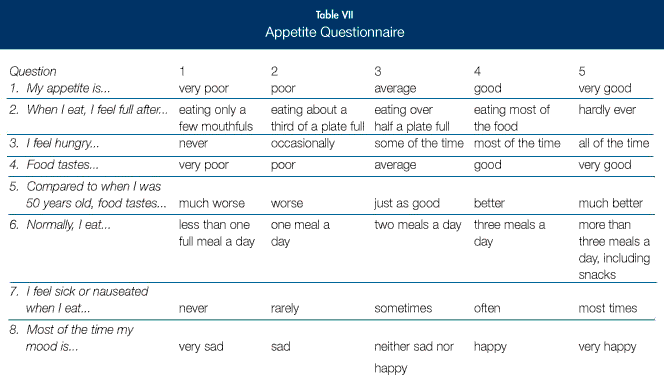
This simple eight-question tool can identify problems with anorexia in older adults. When appetite changes are identified, a search for reversible causes should be instituted. If weight loss continues, use of an orexigenic drug should be considered.
Summary
Profound differences occur in older persons. First, appetite correlates poorly with body weight in older persons, leading to failure to increase ingestion of nutrients in response to weight loss. Older persons exhibit less hunger and earlier satiety. Dramatic and poorly understood alterations occur in the physiologic regulation of appetite. Despite the changes in appetite regulation in older persons, the response to social and psychological stimulants is similar to younger adults. Pharmacologic stimulants of appetite suggest a promising intervention for anorexia.